Sciatica Warning Signs After Summer Travel
Sitting for long stretches in a car or plane can irritate the low back and nearby nerves—sometimes enough to trigger symptoms that feel like they came out of nowhere. If you’re a traveler, a desk worker returning to routine, or anyone who notices new leg pain after a trip, knowing sciatica warning signs can help you respond early and avoid letting a manageable flare-up become a longer-term headache (or, more accurately, a longer-term “butt-to-calf” ache). One practical approach is to track what you feel , where you feel it , and what makes it better or worse before you decide your next step. During summer travel season, it’s especially common for people to push through stiffness, ignore tingling, and hope it disappears once they’re back home.
Because symptoms that resemble sciatica can have different causes, it’s smart to treat new or changing nerve-type pain as a signal to get clarity—especially if it’s affecting walking, sleep, or daily activities.
If you’re looking for help evaluating options for sciatica warning signs in Athens, GA, start by documenting your symptoms and getting guidance on whether a non-invasive approach like laser therapy may be appropriate for your situation.
Key Points to Know First
- Travel-related sciatica-like symptoms often show up as pain, tingling, or numbness that radiates from the low back or buttock down the leg.
- Red flags include worsening leg weakness, symptoms that don’t improve with basic self-care, or pain that disrupts sleep and normal movement.
- Location matters: symptoms typically follow a line down one leg rather than staying only in the low back.
- Early action—movement breaks, gentle mobility, and monitoring triggers—can reduce the chance of a flare-up lingering.
- Some situations require prompt medical evaluation, especially sudden weakness, bowel/bladder changes, or numbness in the groin/saddle area.
How Post-Travel Sciatica Symptoms Typically Start
“Sciatica” is a term people use for pain and other sensations that follow the path of the sciatic nerve—usually from the low back or buttock into the thigh, calf, and sometimes the foot. After travel, the most common setup is simple: prolonged sitting plus limited movement. That combination can increase stiffness in the hips and low back, load the spine in a flexed position, and irritate tissues near nerve roots.
Not every radiating leg symptom is true sciatica, and not every case comes from the same source. But warning signs tend to cluster around a few patterns:
- Radiating pain: discomfort that travels down the leg, not just a sore back.
- Neurologic sensations: tingling, “pins and needles,” burning, or numbness.
- Position sensitivity: symptoms that spike with sitting, bending, or getting in/out of the car.
Why Timing Matters When Nerve Pain Shows Up
When nerve-type pain lingers, it can start changing how you move—shorter steps, leaning away from discomfort, avoiding stairs, or skipping workouts. Those compensations can irritate other areas (hips, knees, opposite-side back) and make recovery feel slower. Waiting can also mean:
- More sleep disruption: night pain can reduce recovery and increase stress.
- Lower activity tolerance: walking and standing may become harder over time.
- More trial-and-error: people often cycle through random stretches or rest periods without a clear plan.
- Higher risk of missing serious issues: rare but urgent symptoms need prompt medical attention.
Travel-Triggered Sciatica Warning Signs You Shouldn’t Ignore
Use the signs below as a practical checklist. Any single symptom doesn’t automatically mean something severe—but patterns, progression, and functional impact matter.
- Pain that shoots below the knee
— Often more suggestive of nerve involvement than pain limited to the low back or buttock.
What to do: Reduce prolonged sitting, take short walks, and note which positions trigger it. - Tingling, burning, or numbness in the leg or foot
— Sensory changes can indicate irritation of a nerve pathway.
What to do: Track where the sensation travels (thigh, calf, toes) and whether it’s constant or intermittent. - Symptoms that worsen with sitting (especially after driving/flying)
— A common post-travel pattern that may point to mechanical irritation.
What to do: Set a timer for movement breaks, try a supportive seat setup, and avoid “pushing through” sharp pain. - Leg weakness, foot drop, or frequent tripping
— Motor changes are a more serious warning sign.
What to do: Stop self-treating and seek prompt medical evaluation, especially if weakness is new or worsening. - Pain that keeps you from sleeping or walking normally
— Functional disruption is a sign you may need a professional plan.
What to do: Consider an evaluation to identify likely drivers and appropriate next steps. - Rapidly escalating symptoms over days
— A trend of worsening matters more than any one moment.
What to do: Get assessed, particularly if you’re losing function or symptoms are spreading.
Common Missteps That Make a Flare-Up Stick Around
- Staying completely still “to rest it off” — Too much inactivity can increase stiffness and sensitivity.
- Copying random stretches from the internet — Some movements can aggravate symptoms depending on the underlying cause.
- Only treating the back when the main issue is leg symptoms — Radiating pain patterns deserve targeted assessment, not guesswork.
- Masking symptoms and returning to long sitting immediately — If the trigger remains, the irritation often returns.
- Ignoring weakness or progressive numbness — These changes can indicate a need for timely medical evaluation.
A Smart Post-Trip Action Plan for Nerve-Type Pain
- Map your symptoms — Write down where pain starts, where it travels, and what activities trigger relief or flare-ups.
- Break up sitting — Stand, walk, or gently move every 30–60 minutes when possible.
- Use gentle, non-provocative movement — Short walks and light mobility are often better than aggressive stretching.
- Adjust your daily setup — Supportive seating, avoiding wallet-in-back-pocket sitting, and neutral posture can help reduce irritation.
- Watch for progression — If symptoms spread, intensify, or start affecting strength, elevate your response.
- Consider non-invasive options — Some people explore laser therapy as part of a conservative approach to managing pain and inflammation.
Professional Insight: The Pattern We See After Long Drives
In practice, we often see people wait until the symptoms have “proven themselves” for a few weeks—then they come in frustrated that the pain now shows up during simple tasks like standing at the sink or walking the dog. When someone tracks triggers early (especially sitting time and movement tolerance), it’s usually easier to have a clear conversation about next steps and whether a non-invasive care plan makes sense.
When to Seek Medical Help for Concerning Symptoms
Get prompt medical evaluation if you notice any of the following:
- New or worsening leg weakness , foot drop, or difficulty lifting the front of the foot
- Loss of bowel or bladder control or new urinary retention
- Numbness in the groin or “saddle” area
- Severe pain after a fall or trauma
- Fever, unexplained weight loss, or feeling systemically unwell along with back/leg pain
If symptoms are persistent, repeatedly triggered by sitting, or interfering with sleep and daily function, it’s also reasonable to seek a professional evaluation to discuss conservative options and rule out more serious causes.
Your Questions, Answered
How can I tell if my leg pain is nerve-related or just muscle soreness?
Nerve-type symptoms often include tingling, numbness, burning, or pain that travels in a line down the leg (sometimes into the foot). Muscle soreness is more likely to stay localized and feel achy or tender to touch.
Is it normal for symptoms to show up a day or two after a trip?
It can happen. Prolonged sitting and reduced movement may lead to stiffness and irritation that becomes noticeable after you return to normal activities. If symptoms persist, worsen, or affect strength, consider getting evaluated.
What should I avoid doing if sitting makes my symptoms worse?
Avoid long, uninterrupted sitting sessions and avoid forcing stretches that reproduce sharp or radiating pain. Instead, use frequent movement breaks and gentle activity that doesn’t flare symptoms.
Can laser therapy be part of a conservative approach for radiating leg pain?
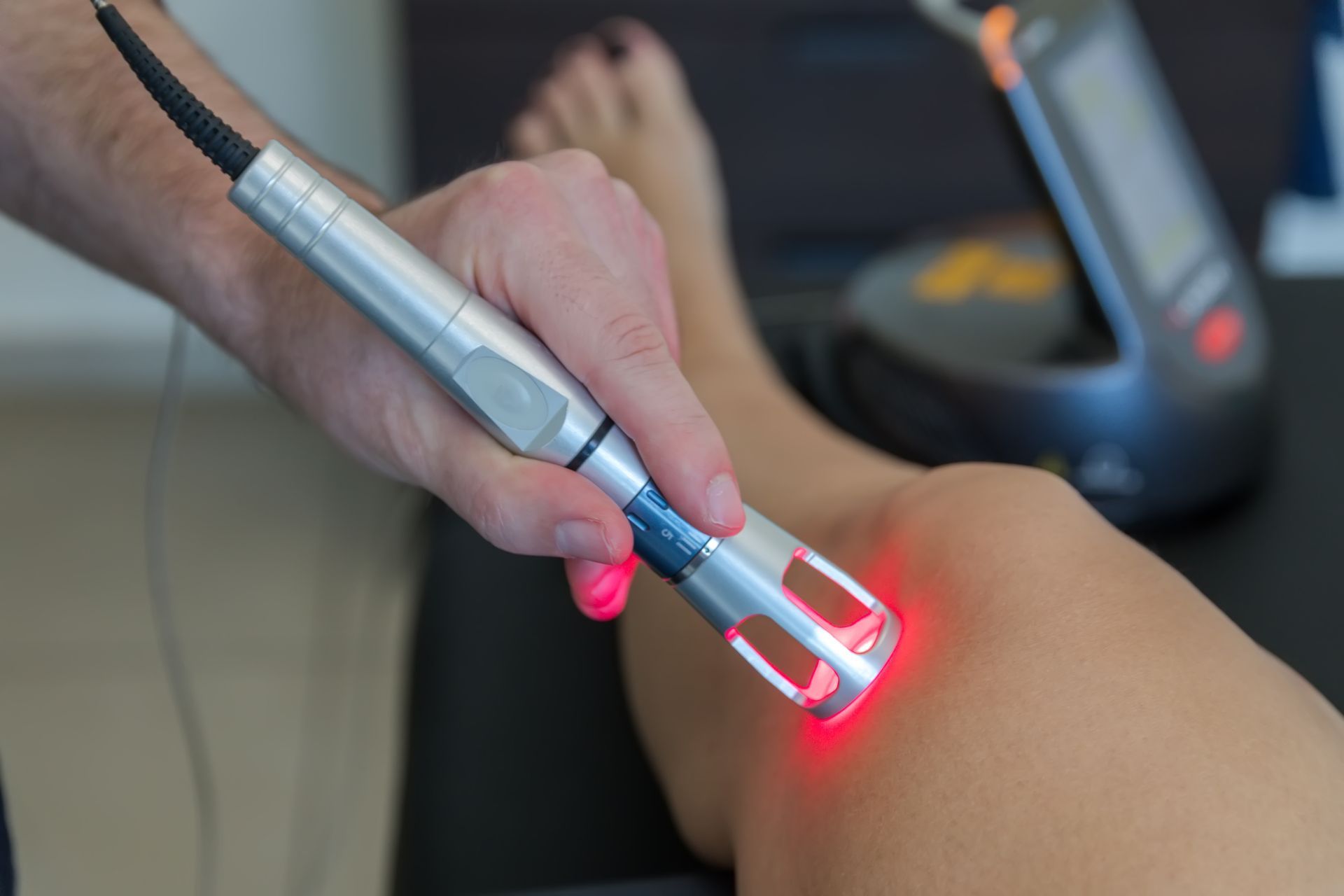
Some people use Class IV laser therapy as a non-invasive option aimed at supporting pain relief and tissue recovery. Appropriateness depends on your specific presentation and should be discussed with a qualified provider.
How quickly should I get help if I notice weakness?
New or worsening weakness is a reason to seek prompt medical evaluation. Weakness can signal more significant nerve involvement and shouldn’t be managed with trial-and-error home care alone.
Where to Go from Here
Post-travel nerve-type pain is easy to dismiss—until it starts changing how you move, sleep, and function. Pay attention to radiating pain patterns, sensory changes, and any signs of weakness. Use movement breaks and symptom tracking to guide your next step, and don’t wait on symptoms that are escalating or disrupting daily life.
Ready to Get Started?
Our team is here to help. Give us a call to discuss your needs.